Residents want chargers. The committee needs a coordinated, site-specific plan.
Kedar helps RWAs move from individual requests to one coordinated plan — demand mapping, transformer feasibility, approvals, installation and O&M under one accountable project.
The risk is not EV charging. It is unmanaged EV charging.
A committee needs to balance resident access, common property, electrical safety, billing and future demand — without turning each request into a new exception.
Requests need a structured response
Private charging in designated parking spaces and community charging within Group Housing Societies require a coordinated approach, subject to applicable utility, electrical-safety, building, society and local requirements.
Consent and design both matter
Parking and common electrical infrastructure require RWA coordination. A clear approval, metering, cable-routing and maintenance framework helps avoid uncoordinated individual installations.
The utility process varies by location
Application, load-sanction and documentation requirements vary by state and local DISCOM. Kedar can prepare technical inputs and coordinate the applicable process within the agreed project scope.
Society delivery process
Five controlled steps from resident demand to operating chargers
The sequence helps the committee avoid committing to equipment before capacity, governance and approvals are understood.
01
RWA consultation
Map resident demand, parking allocation, access, governance and the preferred ownership model.
02
Load feasibility
Assess transformer capacity, sanctioned load, switchgear and cable routes before quoting.
03
DISCOM & approvals
Prepare technical documentation and coordinate the applicable utility process.
04
Detailed installation
Deliver civil and electrical works with controlled disruption to common areas.
05
Onboarding & O&M
Commission chargers, explain resident use and establish monitoring and maintenance.
Society / resident CAPEX
The society or participating residents fund the approved common electrical works and chargers. Asset ownership, electricity recovery and the O&M arrangement are documented before installation. This can suit societies that prefer direct ownership and have a defined initial user group.
Operator-led / subscription
An operator may fund or manage some or all of the charging equipment where projected utilisation supports the model. Ownership, billing, electricity supply, access period and O&M responsibilities are defined in the project agreement.
Hybrid structure
The society may fund shared electrical infrastructure while residents or an operator fund individual chargers and operations. Clear asset boundaries make this useful for phased deployment and mixed private/shared charging.
Final commercial structure is determined after technical and commercial assessment.
Illustrative infrastructure views
What coordinated society charging can look like
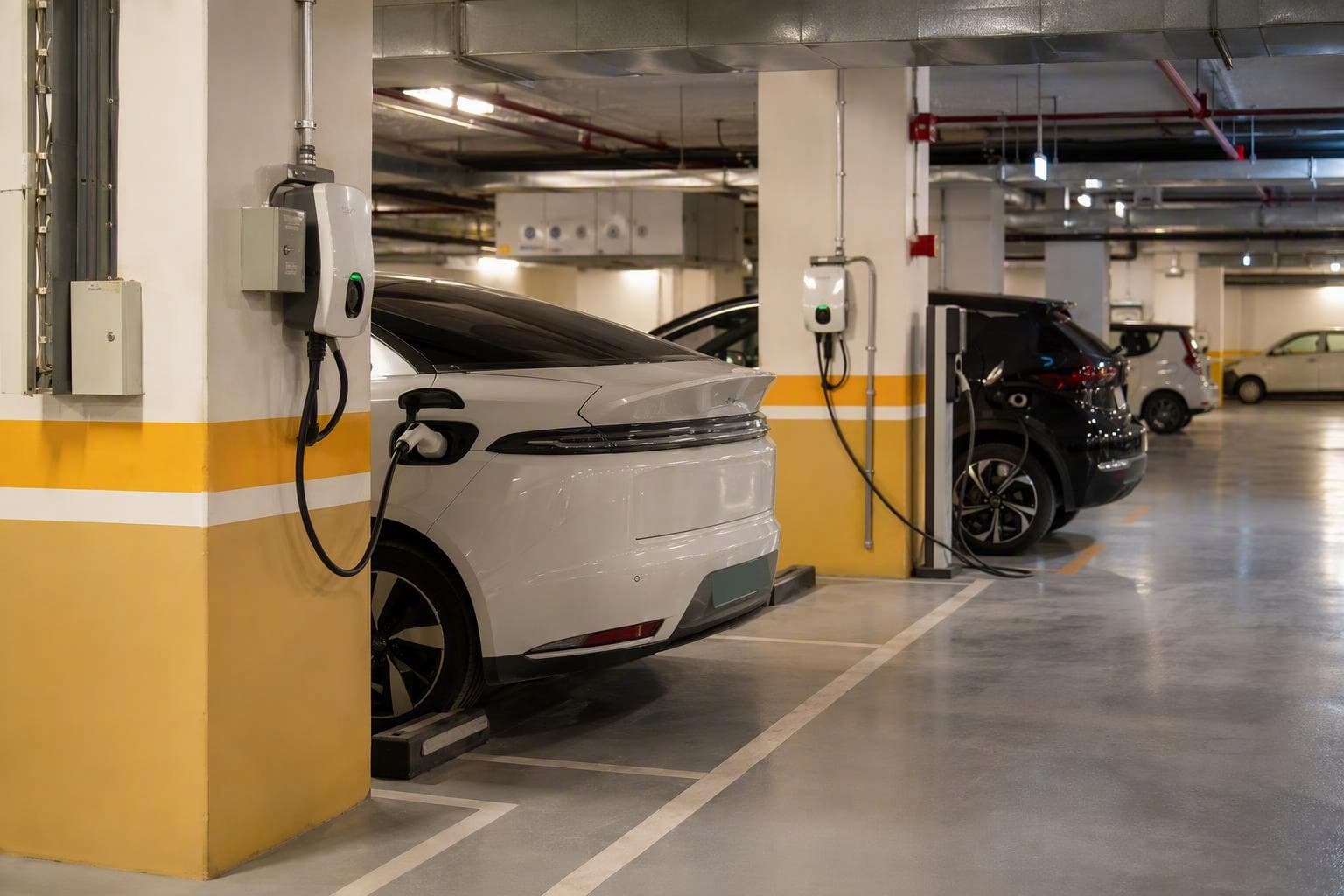
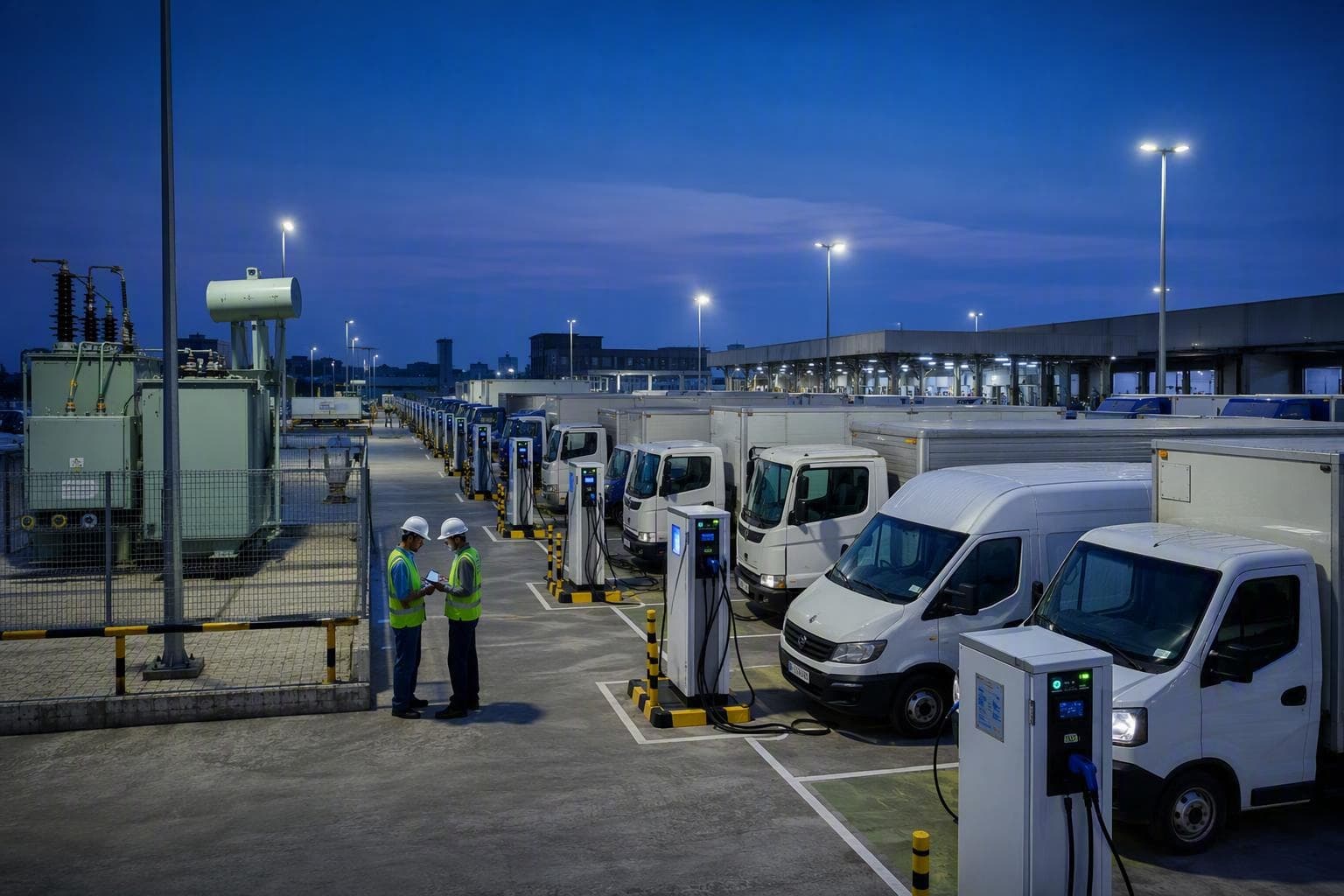
Illustrative visualization. Final charger configuration, equipment and electrical architecture are site-specific.
Private and shared charging in structured parking
Destination-style charging integrated with modern property
Scalable electrical infrastructure and managed charging
Illustrative diagram — how chargers connect into a society's existing parking and electrical layout. Site layouts vary; every project starts with a feasibility study.
Delivery scope
Define responsibilities before appointing a provider
A clear scope should cover feasibility, approvals, electrical design, installation, handover and ongoing support around the chargers.
Dimension
Scope to define
Question to confirm
RWA + DISCOM coordination
Responsibilities, documents and approval support
Who prepares each input, submits applications and follows up?
Before quoting
Site survey and transformer-load feasibility
Which assumptions are verified before equipment and civil works are priced?
Commercial structure
CAPEX, operator-led or hybrid options subject to assessment
Who funds, owns, bills and maintains each asset?
After installation
Monitoring, warranty coordination and defined O&M scope
Who monitors the system and responds to equipment or electrical faults?
Adjacent infrastructure
Common-area solar and charging coordination where relevant
Should solar, building loads and charging be assessed together?
Delivery approach
Feasibility, engineering, EPC and handover boundaries
Which party owns each interface and deliverable?
Committee questions
What RWAs need answered before approving charging
The details vary by society and state. These answers set the decision framework before site assessment.
What should be reviewed before approving a resident charger request?
The applicable process depends on utility requirements, electrical safety, building conditions, society rules and local requirements. A resident and the RWA should document the proposed parking, metering, cable route, approvals and responsibilities before installation. This is general information, not legal advice.
Who pays — the society, the resident, or an operator?
The structure can be resident-funded, society-funded, operator-led or hybrid. Availability and commercial terms depend on demand, electrical works, metering, utilisation and the service partner. Kedar compares viable models after the site and resident requirement are assessed.
Will charging overload the transformer or increase common bills?
The transformer and sanctioned-load assessment is completed before installation. Where needed, managed charging can limit simultaneous demand. Metering architecture is designed so charging consumption can be identified separately from other common-area loads.
Can chargers be private per flat and shared for the community?
Private and shared chargers may be combined, subject to parking allocation, electrical feasibility, applicable requirements and the society's governance model. Private AC chargers can serve dedicated parking slots, while shared charging points can support visitors or residents without a private installation.
How is electrical and fire safety handled?
The design covers earthing, protective devices, isolation, cable routing, enclosure selection, impact protection and emergency access. Equipment and installation requirements are specified against the standards, utility conditions and fire-safety requirements identified for the project.
How long do approval and installation take?
The programme depends on DISCOM turnaround, whether load enhancement is required, civil scope, charger procurement and society approvals. The feasibility output provides a site-specific programme rather than a generic promise.
Does Kedar handle DISCOM documentation?
Where included in the agreed project scope, Kedar prepares technical inputs and supports coordination for the applicable application, NOC or load-sanction process. The society remains responsible for required ownership, authorisation, account and signature documents.
Who is responsible if equipment fails or is damaged?
Equipment warranty, installation responsibility, preventive maintenance, breakdown response and resident-caused damage should be defined in the final contract. Kedar documents the responsibility split and O&M scope before commissioning.
Society assessment
Give the committee a practical starting point
Share the society, city, approximate scale and resident demand. We will review what needs to be assessed before a charging plan can be defined.