
Skip to content
Kedar Energy Solutions

CBG & biogas infrastructure

Waste-to-fuel infrastructure built around feedstock reality

We connect feedstock characterisation, process selection, detailed engineering, plant EPC, gas upgrading and operational handover into one project framework.

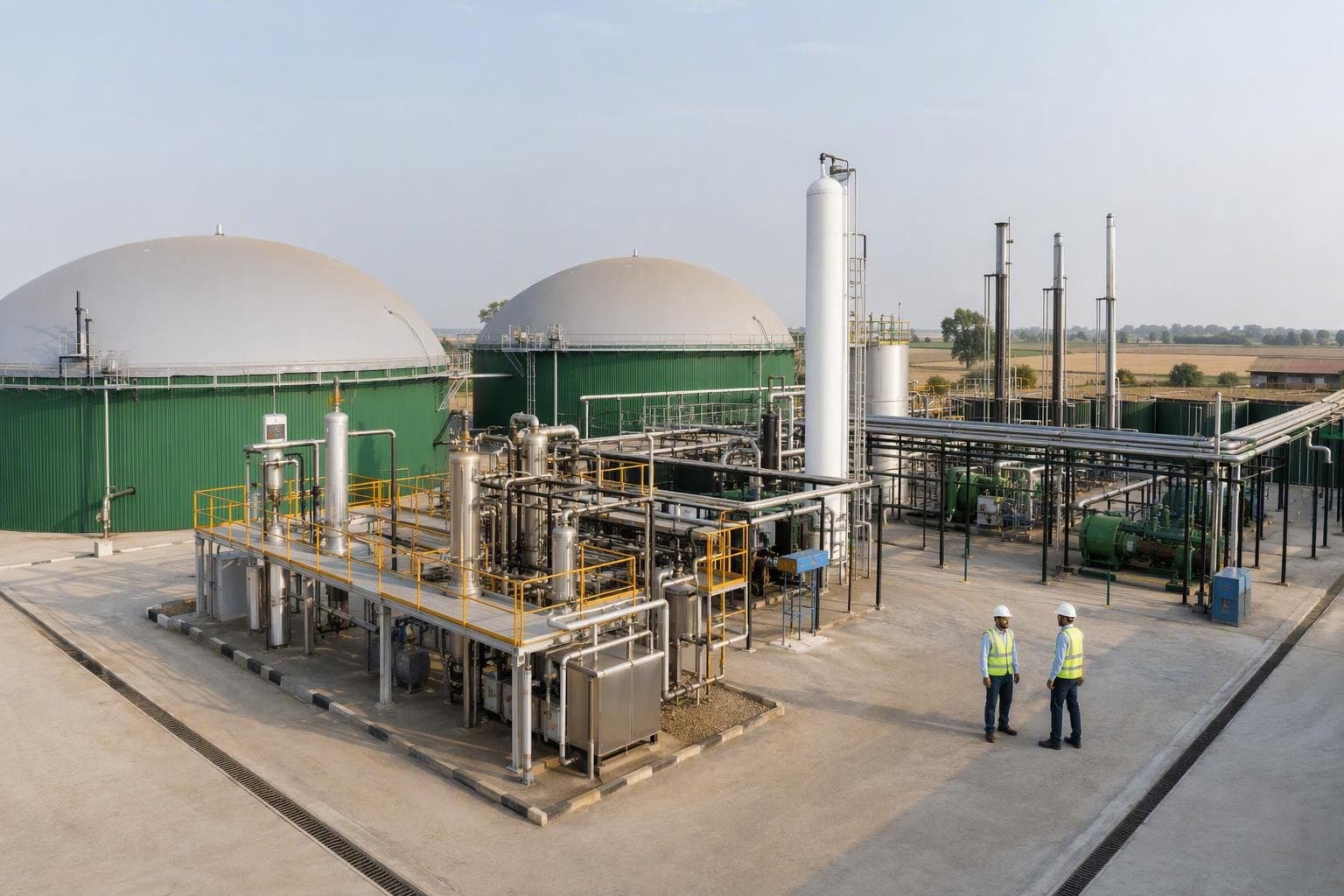
Illustrative view of a compressed biogas facility with digesters, purification and process equipment
ConsultancyEngineering & EPCO&M

The Kedar approach

CBG performance begins with consistent feedstock and disciplined process design. Before plant sizing, we assess quantity, seasonality, composition, logistics, pre-treatment and the intended gas-use or off-take pathway.

Capabilities

One project team across the full infrastructure scope

Advice, engineering and execution remain connected, so key assumptions do not disappear between vendors.

01

Feedstock & feasibility

Establish whether the input stream can support a stable process and business case.

  • Feedstock quantity, quality and seasonality assessment
  • Biogas potential and plant-sizing analysis
  • Collection, storage and pre-treatment planning
  • Technology and process-route evaluation
  • Commercial model and off-take assessment
02

Process engineering & EPC

Integrate civil, mechanical, electrical and process systems into one plant.

  • Process flow, mass balance, P&ID and plant layout
  • Digestion, mixing and feed systems
  • Gas purification, drying and compression
  • Civil, mechanical and electrical procurement
  • Erection, testing and commissioning
03

Operations & optimisation

Stabilise feed, biology, gas quality and equipment performance after handover.

  • Process monitoring and yield optimisation
  • Feedstock supply-chain coordination
  • Mechanical, electrical and instrumentation maintenance
  • Gas-quality and compression-system oversight
  • Operator training, SOPs and performance review

Technical pathway

A controlled pathway from organic feedstock to compressed gas

Each stage must be designed around the chemistry, material handling and final gas specification — not treated as isolated equipment packages.

  1. 01

    Feedstock

    Characterise, collect and prepare inputs

  2. 02

    Digestion

    Control biological conversion and retention

  3. 03

    Raw biogas

    Manage gas collection and conditioning

  4. 04

    Purification

    Remove CO₂, moisture and contaminants

  5. 05

    Compression

    Bring gas to the required storage condition

  6. 06

    Dispatch

    Coordinate storage, use or off-take

Illustrative view of anaerobic digestion and gas purification infrastructure

Where it works

Plant architecture changes with the feedstock and operating model

01

Dairy & cattle waste

Collection, slurry handling and biological stability designed around manure-based feed.

02

Agri & industrial residue

Pre-treatment and feed logistics built around seasonal or process-derived organic streams.

03

Food & organic municipal waste

Segregation, contamination control and material handling integrated into the process.

04

Captive industrial gas use

Gas quality, compression and operating continuity aligned with the consuming facility.

Technical questions

Frequently asked questions

The right answer depends on the site. These are the principles we use before detailed assessment.

Which feedstocks can be evaluated for a CBG project?

Typical inputs include cattle manure, press mud, distillery streams, food and market waste, segregated organic municipal waste and agricultural residues. Suitability depends on composition, contamination, moisture, consistency, logistics and the selected process route.

How is plant capacity established?

Capacity follows the dependable feedstock supply and its realistic gas potential. We assess daily and seasonal availability, laboratory or reference characteristics, collection radius, storage and pre-treatment before recommending a process size.

Does Kedar cover purification and compression?

Yes. The engineering scope can include raw-biogas conditioning, purification, drying, compression, storage and the balance of plant. Final specifications depend on the intended gas use and applicable standards.

What is needed before a feasibility study starts?

A useful first package includes feedstock type, estimated quantity, seasonality, current handling method, site information and the intended gas-use or off-take route. Site visits and sampling can then close the major data gaps.

Can you support operations after commissioning?

Support can include operator training, SOPs, preventive maintenance, process monitoring and performance optimisation. The final operating scope is defined around the plant technology and owner capability.

Start with feasibility

Test the feedstock case before defining the plant

Share the feedstock, location and intended gas pathway. We will help structure the technical and commercial feasibility study.