
Skip to content
Kedar Energy Solutions

EV charging infrastructure

Charging infrastructure engineered around the site — not the charger catalogue

From private AC charging to fleet and destination networks, we integrate electrical capacity, charger selection, civil works, software and lifecycle support into one accountable project.

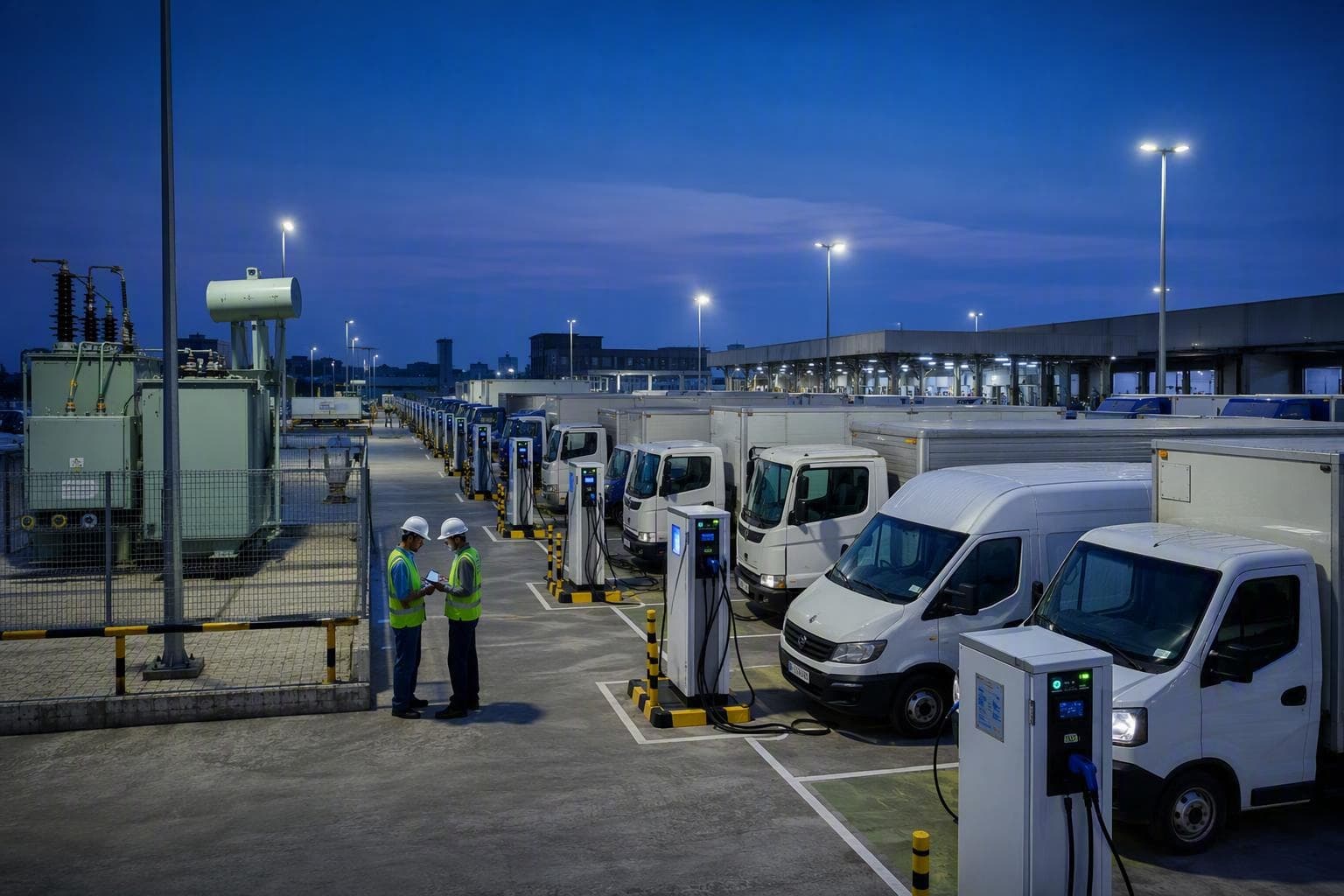
Illustrative view of electric commercial vehicles connected to fast chargers at a fleet depot
ConsultancyEngineering & EPCO&M

The Kedar approach

A viable charging site depends on much more than rated charger power. We assess demand, dwell time, transformer capacity, sanctioned load, cable routes, bay operations, approvals and the commercial model before equipment is selected.

Capabilities

One project team across the full infrastructure scope

Advice, engineering and execution remain connected, so key assumptions do not disappear between vendors.

01

Consultancy & feasibility

Build the technical and commercial case before capital is committed.

  • Site feasibility and traffic / dwell analysis
  • Connected-load and transformer assessment
  • AC / DC charger and connector recommendation
  • CAPEX, OPEX and hybrid business-model assessment
  • DISCOM load-sanction and application support
02

Engineering & EPC

Coordinate the complete electrical, civil and charging system.

  • Single-line diagrams, cable sizing and BOQ
  • Charger, switchgear and transformer procurement
  • Civil foundations, trenching and bay works
  • Installation, testing and commissioning
  • OCPP backend and payment-system integration where required
03

Operations & maintenance

Keep the charging asset available, safe and operationally useful.

  • Remote charger-health monitoring
  • Preventive maintenance and breakdown support
  • Load management and power optimisation
  • Firmware and backend coordination
  • Performance reporting and field-service management

Technical pathway

From vehicle demand to a commissioned charging asset

Every stage resolves a different infrastructure risk — utilisation, electrical capacity, approvals, installation and uptime.

  1. 01

    Demand

    Vehicle mix, dwell time and charging behaviour

  2. 02

    Load

    Transformer capacity and sanctioned supply

  3. 03

    Design

    Charger mix, electrical system and bay layout

  4. 04

    Approve

    DISCOM coordination and required permissions

  5. 05

    Build

    Civil, electrical, installation and testing

  6. 06

    Operate

    Monitoring, load control and maintenance

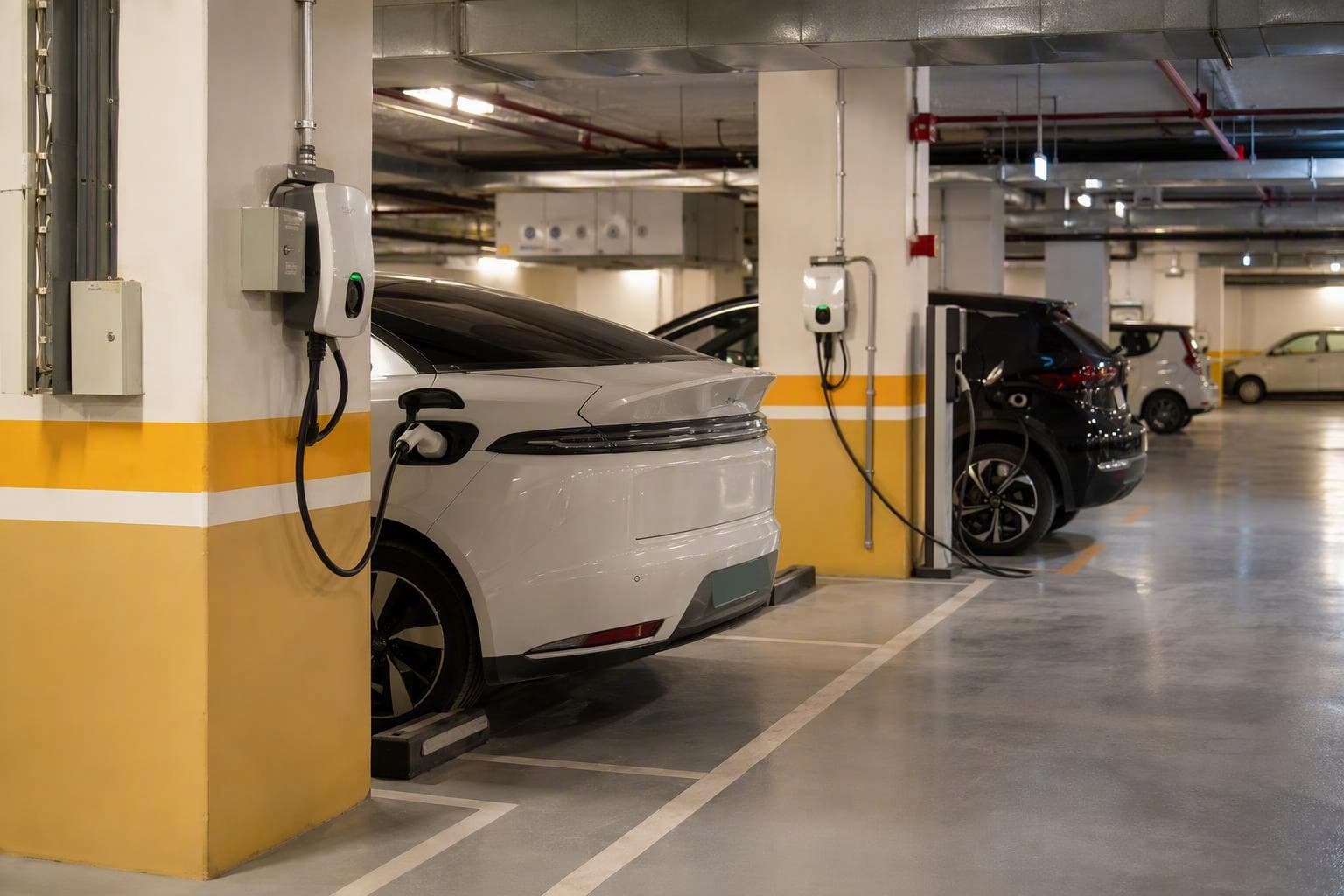
Illustrative view of EV chargers in residential basement parking

Where it works

One engineering approach, different operating environments

01

Housing societies & RWAs

Private and shared charging designed around resident demand, common-area constraints and transformer capacity.

02

Fleet & logistics hubs

High-utilisation charging planned around route cycles, dwell windows and depot electrical infrastructure.

03

Commercial & workplace

Destination and employee charging integrated into parking operations and building loads.

04

Public & destination charging

Reliable charging infrastructure for retail, hospitality, highways and municipal locations.

EV charging for housing societies

Technical questions

Frequently asked questions

The right answer depends on the site. These are the principles we use before detailed assessment.

How do you decide between AC and DC chargers?

We begin with vehicle type, dwell time, daily energy requirement and available electrical capacity. AC charging often suits long-dwell locations such as homes and workplaces, while DC charging is appropriate where vehicles need higher energy transfer within shorter operating windows.

Will the site need a transformer or load enhancement?

Not always. Our load assessment reviews spare transformer capacity, sanctioned load, diversity and the potential for smart load management. The feasibility report identifies whether the existing supply can be used or an upgrade is required before the project is quoted.

Do you coordinate with the local DISCOM?

Yes. We support load-sanction applications, technical documentation and DISCOM coordination required for the charging installation. The exact process and timeline depend on the state, utility and site scope.

Can Kedar support chargers from different manufacturers?

Our engineering and O&M approach is hardware-aware rather than tied to one charger catalogue. Final compatibility depends on the selected charger, connector, backend and service arrangement, which are defined during design.

What happens after commissioning?

The handover includes testing records, operating guidance and as-built documentation. Ongoing support can include remote monitoring, preventive maintenance, breakdown response and coordination with charger or software providers.

Start with feasibility

Plan the charging system before you procure the chargers

Share the site, vehicle demand and operating window. We will help define the electrical, commercial and execution path.