
EV Charging
Evaluating EV Fleet Total Cost of Ownership
Why fleet decisions should be based on duty cycle and lifecycle cash flow rather than vehicle price alone.
1 min read
01
TCO follows the route
Two fleets buying the same vehicle can reach different economic outcomes because distance, payload, charging window, electricity tariff and vehicle utilisation differ. The duty cycle must be modelled before the charging system or fleet transition is finalised.
02
Include the infrastructure
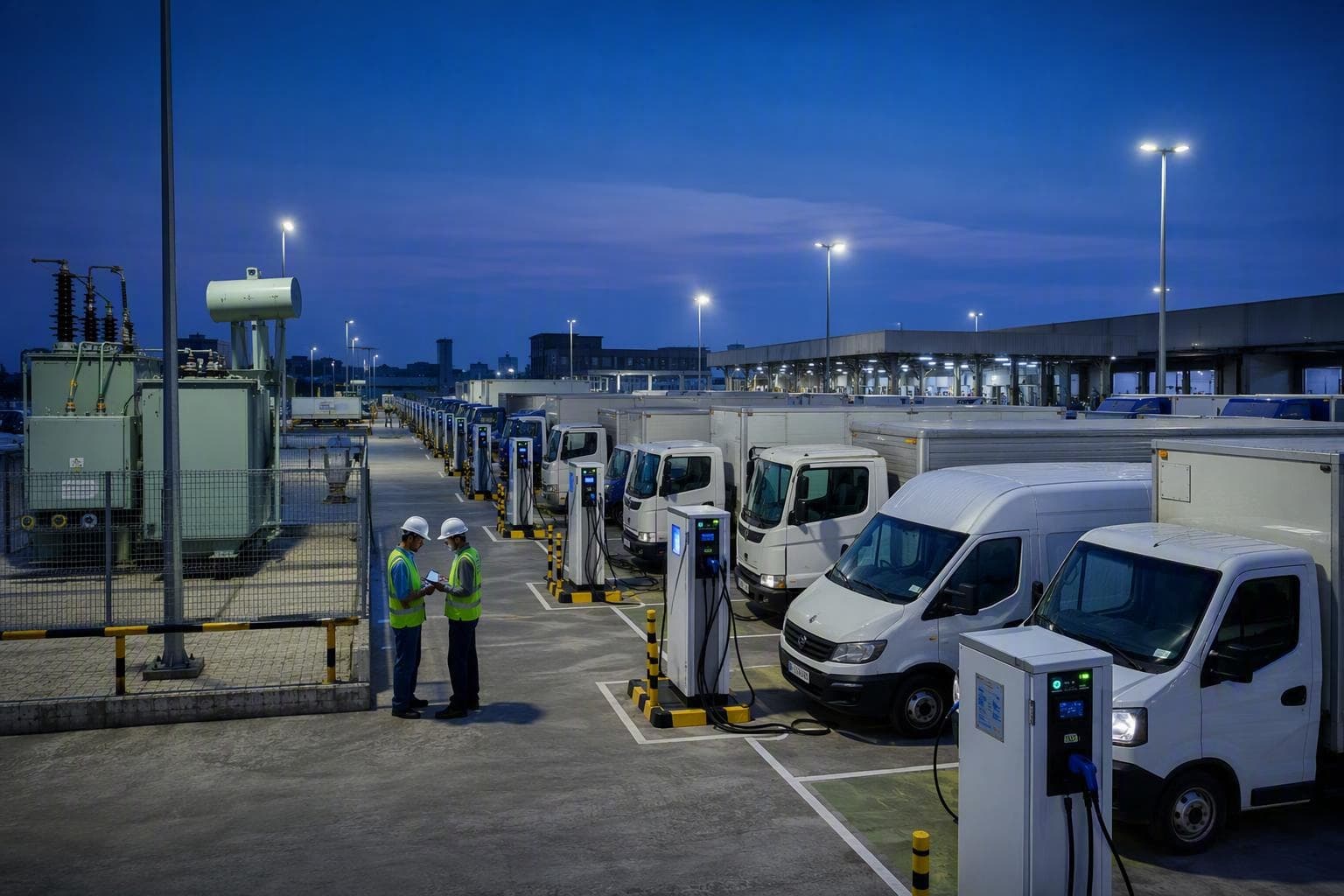
An EV comparison that excludes charging infrastructure is incomplete. Connection enhancement, transformers, switchgear, civil works, chargers, software and maintenance belong in the transition model.
- Vehicle acquisition and financing
- Energy cost under the expected charging tariff
- Charging infrastructure and grid work
- Scheduled and unscheduled maintenance
- Utilisation and downtime
- Residual-value assumptions
03
Operational fit comes before theoretical savings
The vehicle must complete the route with a realistic energy reserve and return within a workable charging window. Where the route and dwell pattern fit, depot charging can create predictable operations. Where they do not, higher charger power alone may not solve the constraint.