
CBG & Biogas
CBG 101: From Waste to Fuel
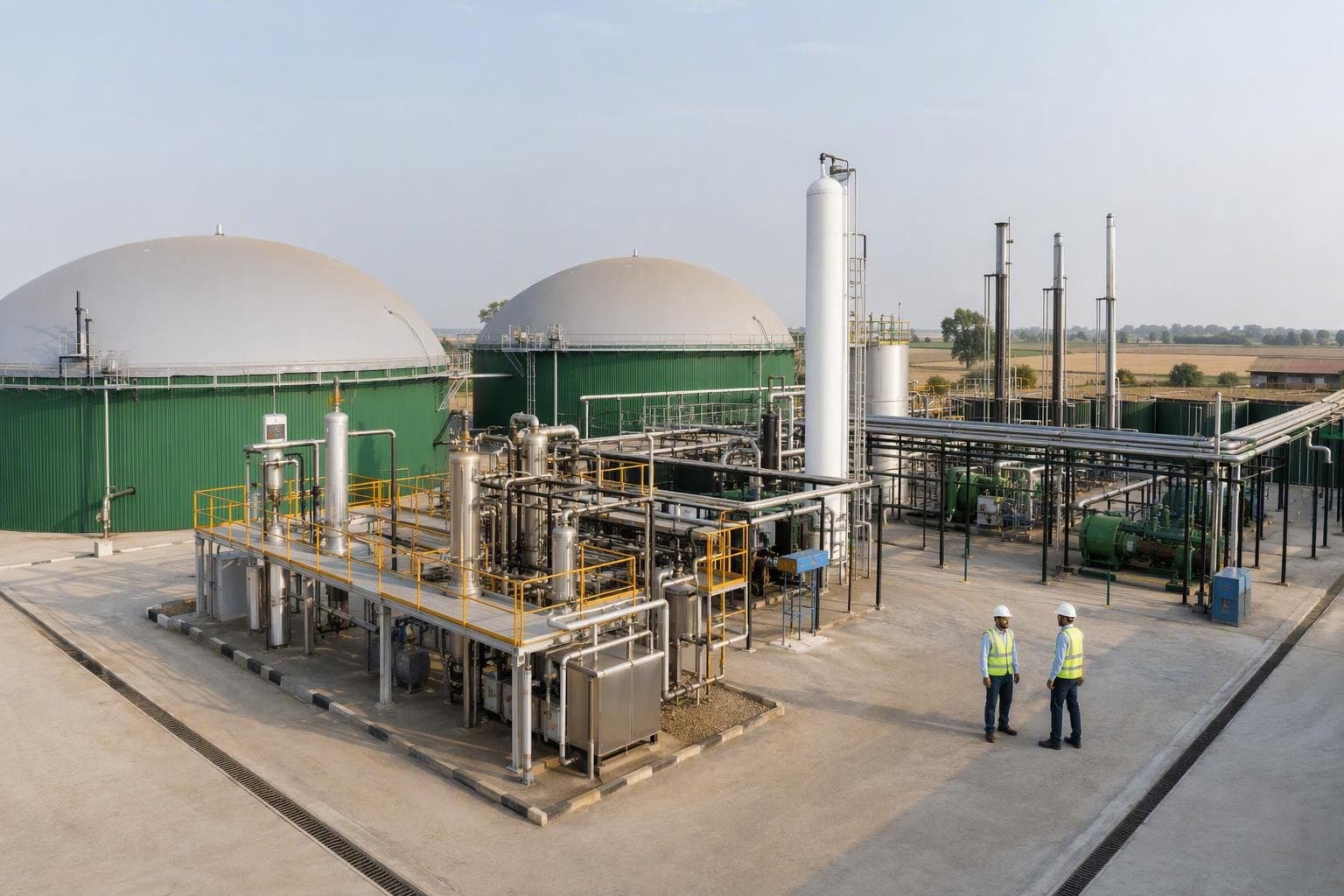
The major process stages that convert an organic feedstock stream into purified and compressed biogas.
1 min read
01
The plant begins with feedstock
CBG is often described as a gas-processing project, but plant performance starts with the material entering the gate. Quantity, composition, contamination, moisture, seasonality and collection logistics determine what process can operate reliably.
A dependable feedstock study separates theoretical availability from material that can actually be contracted, transported, stored and fed each day.
02
Biological conversion needs process discipline
Anaerobic digestion uses microbial activity to convert organic material into raw biogas. Retention time, temperature, mixing, pH, organic loading and feed consistency influence stability and yield.
The digester cannot compensate indefinitely for inconsistent input. Pre-treatment, blending and feed management are therefore part of core plant engineering.
03
Raw biogas must be conditioned
Raw biogas contains methane alongside carbon dioxide, moisture and other contaminants. Purification and drying bring the gas toward the required specification, after which compression and storage systems prepare it for the intended use or dispatch route.
- Feed preparation and digestion
- Gas collection and conditioning
- Purification and moisture removal
- Compression and storage
- Digestate handling and site utilities